
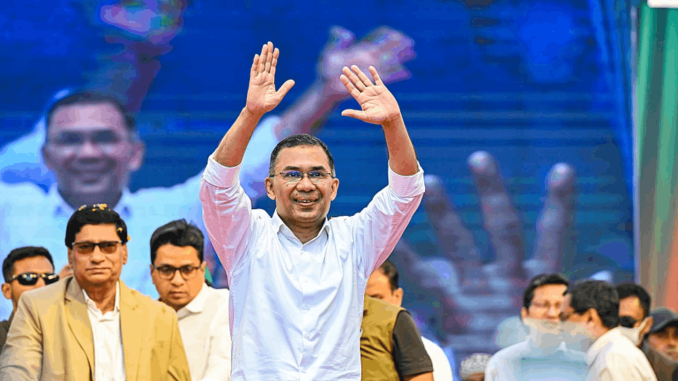
The Bangladesh Nationalist Party (BNP) says it has won the country’s first election since longtime leader Sheikh Hasina was forced to leave in 2024.
Unofficial results show the BNP won 209 seats in parliament. That is more than the 151 seats needed for a majority. The party’s leader, Tarique Rahman, will likely become the next prime minister.
The second-largest winner was Jamaat-e-Islami, which won 68 seats. The party was banned in 2013 but was allowed to run again after Hasina left power. Jamaat-e-Islami said it was not happy with the vote count and had concerns about fairness.
Another party led by young activists, the National Citizen Party (NCP), won only six seats.
Around 60 percent of registered voters cast their ballots. That is much higher than the 42 percent in the last election in 2024. More than 50 parties and 2,000 candidates took part.
The election was the first competitive vote in Bangladesh in years. An interim government led by Nobel winner Muhammad Yunus has been in charge since Hasina fled to India in 2024 after student-led protests.
Tarique Rahman, 60, returned to Bangladesh in December after 17 years of living in the UK. He has not yet spoken publicly about the results.
The BNP asked people not to hold big celebrations but to offer prayers instead.
Former leader Hasina, 78, has been sentenced to death for her role in the deadly crackdown on protesters. Her party, the Awami League, was not allowed to run in the election. The BNP says it will ask India to send Hasina back to Bangladesh.
The BNP has promised to create jobs, help poor families, support farmers, fix the economy, and fight corruption.
Experts say the election was a test of whether Bangladesh is ready for democracy. Some said the vote would have been fairer if all parties, including Hasina’s, had been allowed to take part.
Leaders from India, Pakistan, the US, and China congratulated the BNP.
Along with the election, Bangladeshis also voted in a referendum on constitutional changes. These include term limits for prime ministers and stronger rights for women and judges.
Despite heavy security at polling stations, the voting was mostly peaceful. International observers, including from the European Union, watched the voting and will share their findings soon.
Leave a Reply